There is an English text below.
本を出版することは単なる文章を書くことではありません。構成がしっかりしていれば、執筆がスムーズに進み、読者に伝わりやすい本になります。では、どのように構成を考えればよいのでしょうか?
まず大事なのは「誰に向けて出版するのか?」です。ミッションブックの作成では、第一読者は自分自身です。自分が参考になる本を作るのがミッションブックの目的の1つですから。では、次の読者は?これは「タイトル」と「目次作り」の作業をしながら、徐々に明確にしていきましょう。
私が最近書いた『ミッションプログラム』という本で説明をしましょう。私は大学院で使命の研究をしました。仕事はキャリアカウンセラーだったので、使命やミッションが就労に大切なことだとわかっています。
そこで『ミッションプログラム』というタイトルの本を作ることにしました。出版の目的とテーマは「ミッションプログラムという新しいアプローチによって読者が元気に活動できるようにしよう」と決めました。
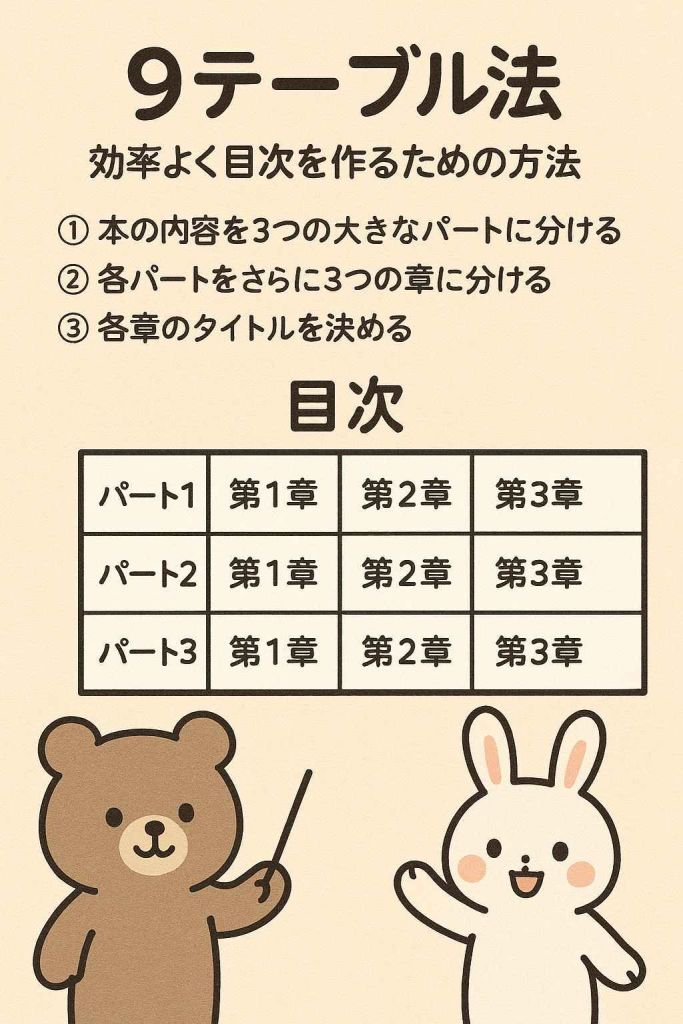
次は章立てと目次作りです。ここで「9(ナイン)テーブル法」という方法を紹介します。この方法を使えば、誰でも効率よく目次を作ることができます。9テーブル法とは、本の構成を3×3のマトリックスで考える方法です。具体的には、
①本の内容を3つの大きなパートに分ける。
②各パートをさらに3つの章に分ける。
③各章のタイトルを決める。
▶例:『ミッションプログラム』の例
第1編 自分でも取り組めるミッションセラピー
第1章 どうしてそんなに元気なんですか
第2章 心と体と精神に効く新たな働き方
第3章 生きがいを見出だせる命の使い道
第2編 勇気りんりんミッションエンパワメント
第4章 どんどんやり抜く力がついてくる
第5章 もう人間関係で悩まないで下さい
第6章 これから先は何をしたいのですか
第3編 とわに生き残るゴーイングミッション
第7章 使命文とミッションブックの作成
第8章 出版健康法で生きがいを感じよう
第9章 死んでからも役立つ永遠の言伝て
目次作りは、慣れれば1日で素案を作れます。ポイントは「3つに分ける」こと。マジックナンバー3です。普段から「過去・現在・未来」や「自分・他者・社会」など、物事を3つの視点で考える習慣をつけると、楽に構成を決められます。
ミッションプログラムは本を書く前から「ミッションセラピー」「ミッションエンパワメント」「ゴーイングミッション」と3つのプロセスにしてあったので書きやすかったです。
章のタイトルを決めるときは、読者が興味を持ちやすい言葉を選びつつ、内容が一目で分かるように工夫しましょう。たとえば第1章の「どうしてそんなに元気なんですか」は、読者が「何か特別な秘訣があるのか?」と興味を持つように考えたものです。
目次が決まったら、次は事前調査と資料収集です。キュレーション(Curation)という手法を活用してネット上で関連情報を集めたり、書籍やレポートを調べたりします。キュレーションとは、インターネット上にある膨大な情報を特定の分野やテーマで収集・選別・編集して共有することです。
ChatGPTを使って下調べをするのも一つの手ですが、AIの文章をそのまま使うのではなく、参考にしながら自分の言葉でまとめることが重要です。
『ミッションプログラム』の事例ですと、「元気」(1章)、「精神」(2章)、「生きがい」(3章)、「やる気」「モチベーション」(4章)、「人間関係」(5章)・・・といった感じで、各章ごとに事前調査をしました。
その次は資料収集です。書籍や報告書やレジメを目次素案にそって集めていきます。手元に関係する蔵書がない場合は、新しく本を購入したり、図書館で借りてきたりします。以前に自分が出席したセミナーや講座の資料も検討したいテーマに関係しそうならば収集・分類をしていきます。ネットを利用して参考となる動画やWebセミナーに参加してもいいでしょう。キュレーションの結果もノートなどに整理します。
資料がそろったら、テーマや目的、構成(目次、編と章立て)をもう一度検討します。ここで自分の体験やエピソードを盛り込めるか考えます。時々、調べた文章をそのまま自分の文章として書く人がいますが、それはいただけません。ミッションブックの内容は自分の経験を元にしたキャリアコンテンツです。オリジナル性を大切にしましょう。
さて、いよいよ執筆です。ここからは気楽にいきましょう。健康法の一貫として、執筆と出版をするわけですから。
『ミッションプログラム』では、各章は3~4ページ、文字数は1ページあたり43字×17行、1章の文字数はだいたい2,400字(原稿用紙6枚程度)にしました。
この本は1章に1つのテーマで書きましたが、章の中に節を設けて書いても構いません。各章のページ数を減らしても構いません。これらの章に「はじめに」と「おわりに」を加え、図表を何ページか入れて完成させた本は全部で54ページになりました。
これが基本的な書き方になります。これをベースに編や章を増やしていったら大作ができあがります。『ミッションプログラム』は手軽に買って読めるようにページ数を減らしましたが、以前に書いた『ミッショニング』の本は300ページを越える大作となりました。
POD出版の本は最低12ページでも出版できます。写真やイラストだけの本も作れます。分量や体裁は気にしなくてもよいですし、文章を書くのが苦手な人でも大丈夫です。
本の執筆が始まったら、日々のメモ書きを活用する「臨場筆記」という方法が役立ちます。これは、仕事や活動の記録、ふと思いついたアイデア、過去の出来事などを自由に書き留める習慣のことです。文章の完成度は気にせず、とにかく書いてみましょう。
たった一文でも書くことで精神が活性化して健康の元ができます。書く習慣をつけると頭が冴えて創造性が高まります。ひらめきやアイデアは書いている時間に生まれるのです。
順番は「書く→ひらめき」で、「ひらめき→書く」の順番ではありません。Lesson1の「やる気が最初にあるのではなく、やり始めるとやる気が出てくるのです」を思い出して下さい。書き始めると良いアイデアが浮かぶのです。
さらに、本の中に「ミッションステートメント」を取り入れましょう。これは、あなたの人生や仕事の使命を明確にするものです。自分の生涯の使命(ライフミッション)や仕事上の使命(キャリアミッション)を書き込むことで、より本の内容に説得力が増し、読者にも深く響きます。ミッションステートメントを入れないと画竜点睛を欠きます。
執筆後は、推敲と校正を必ず行いましょう。文章を声に出して読んでみる、他の人に読んでもらう、ツールを活用するなど、客観的な視点を取り入れることが大切です。文章作法はWebで調べてもわかりますし、文章読本などの書籍を買って学んでもよいでしょう。
Publishing a book is not merely about writing text. If your structure is solid, your writing will flow smoothly, and your message will be easily understood by readers. But how should you design your structure?
The first essential question is: “Who are you publishing for?” In the case of creating a Mission Book, your primary reader is yourself. One of the goals of a Mission Book is to create a book that will be helpful to you. But who is the next reader? This becomes clearer as you work through the title and table of contents.
Let me explain using a recent example—my book titled The Mission Program. I studied the concept of life missions in graduate school, and as a career counselor, I understood how crucial missions are for employment and purposeful living.
So I decided to create a book titled The Mission Program. The purpose and theme of the publication were set: “To empower readers to live actively through a new approach called the Mission Program.”
Next comes the chapter organization and table of contents. Here, I introduce the “9-Table Method”—a simple yet powerful tool to help anyone draft a table of contents efficiently. This method involves organizing a book using a 3×3 matrix.
1. Divide the book into three major parts.
2. Divide each part into three chapters.
3. Decide on a title for each chapter.
▶Example: The Mission Program
Part I: Accessible Mission Therapy
Chapter 1: Why Are You So Energetic?
Chapter 2: A New Way of Working That Heals Mind, Body, and Spirit
Chapter 3: Finding Life Purpose and Meaning
Part II: Courageous Mission Empowerment
Chapter 4: Gaining the Power to Persevere
Chapter 5: Stop Worrying About Human Relationships
Chapter 6: What Do You Want to Do From Now On?
Part III: Everlasting Going Mission
Chapter 7: Writing Your Mission Statement and Mission Book
Chapter 8: Finding Meaning Through the Publishing Health Method
Chapter 9: Leaving a Legacy That Lives On After Death
With practice, you can draft a table of contents in a day. The key is to “divide into three.” The magic number is three. If you regularly think in threes—like “past, present, future” or “self, others, society”—you’ll find it easier to structure your writing. In my case, I had already divided the Mission Program into three processes: “Mission Therapy,” “Mission Empowerment,” and “Going Mission,” which made writing smoother.
When deciding on chapter titles, use language that piques reader interest and clearly conveys the content. For example, Chapter 1’s title, “Why Are You So Energetic?” was designed to make readers curious about a possible secret behind such energy.
Once the table of contents is set, the next step is preliminary research and material gathering. You can use a method called curation—collecting, selecting, and editing online content by theme. Look up related topics online, read books, and study reports.
Using ChatGPT for research is also a good approach, but instead of copying the AI-generated text, it’s important to summarize the insights in your own words.
In The Mission Program, each chapter was backed by preliminary research on keywords like “energy” (Chapter 1), “spirit” (Chapter 2), “life meaning” (Chapter 3), “motivation” (Chapter 4), “relationships” (Chapter 5), and so on.
Next is the material collection phase. Gather books, papers, handouts, and other resources relevant to your draft table of contents. If you don’t already have the resources, consider buying books or borrowing from a library. Old seminar materials may also be useful. You can even watch online seminars or videos, and organize the curated content in your notes.
Once you’ve collected the materials, review your theme, purpose, and structure again. Consider including personal experiences or episodes. Some people make the mistake of copying content from their research, but remember—Mission Books are built on your unique life experiences. Originality is vital.
Now it’s time to write. Let’s approach this calmly—after all, you’re writing and publishing as part of a wellness practice.
In The Mission Program, each chapter was about 3–4 pages long, with 43 characters per line and 17 lines per page, totaling about 2,400 characters per chapter (equivalent to 6 pages of standard manuscript paper).
You can also include subsections within chapters if you wish, or reduce the number of pages per chapter. I added an introduction and conclusion, plus a few diagrams and charts, and the entire book came out to 54 pages.
This is the basic writing approach. You can add more parts and chapters later to create a longer book. While The Mission Program was concise for easier reading, a previous book I wrote, Missioning, became a more extensive 300-page work.
With POD publishing, you can publish books starting at just 12 pages. You can even create books that consist only of photos or illustrations. Don’t worry about length or formatting—writing skills are not a prerequisite.
Once writing begins, a technique called “on-the-spot writing” becomes useful. This means jotting down spontaneous thoughts, work notes, daily events, or memories without worrying about structure. Even a single sentence activates your mind and supports your well-being.
The habit of writing sharpens the mind and boosts creativity. Ideas often come while writing—not before writing. Remember Lesson 1: “Motivation doesn’t come first. You start doing it, and then motivation follows.”
Also, include a “Mission Statement” in your book—this clarifies your life and career purpose. By articulating your life mission or career mission, your book gains more depth and resonates with readers. Without it, your book may lack its finishing touch.
Finally, be sure to revise and proofread your manuscript. Read it aloud, ask someone else to review it, or use tools to get objective feedback. You can learn about writing etiquette online or by reading guidebooks on writing.
This is how you create a Mission Book using the Publishing Health Method and the 9-Table
 ミッション健康プログラム~出版健康法とAIライティングの事例
コメントを残す